
Return to the sky
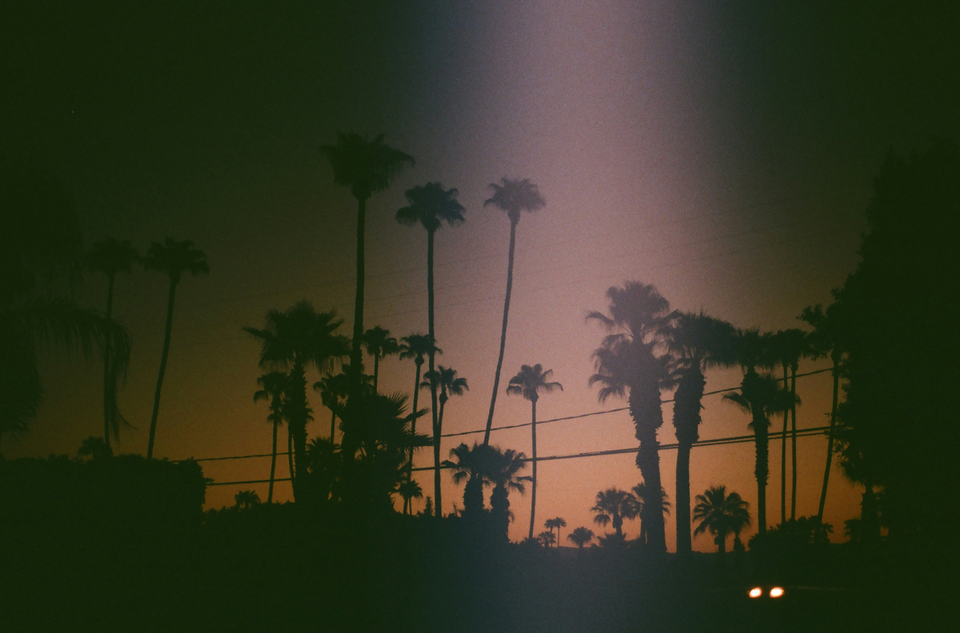
Beginning a month-long experiment in awe, attention and reclaiming aliveness in an age of intelligent machines.

Why first-hand experience is an act of resistance
Yesterday, I cried on the train between London and Devon. I say ‘cried’, but actually it was sobbing – that ugly crying that rises from the chest and goes all guttural in your throat. Increasingly, I can do this on public transport without disturbing anyone. Most of the other passengers are too immersed in their phones to notice. Those that aren’t steal the sort of glance you give someone talking to themselves on a night bus before slipping in their ear pods, leaving me to weep in peace.
Because I love life – by which I mean that immeasurable, undefinable, invisible force that animates the separate parts of all living beings – so fiercely, I am sometimes hit by waves of grief at having to spend so much of mine staring at a screen.
Since AI became part of our everyday lives two years ago, technology is replacing human jobs at a rapid pace, freeing corporations big and small from having to pay their wages. This usually means the onus is on us, the people, to spend our irreplaceable time picking up the slack. When I have to download a second app so I can authenticate the first, navigate a pre-recorded ‘customer services menu’, or click all the pictures with bicycles to prove I am a human, my proud animal heart breaks a little.
****
At a tiny restaurant in Lisbon’s medieval Alfama district, the waiter asks my friend Santiago and I to leave a Google review before our grilled fish has even arrived. This voluntary digital surveillance, willingly embraced by everyone from my water company to taxi drivers, reminds me of the Panopticon – the architectural design proposed by the English philosopher Jeremy Bentham in the late 18th century that encouraged prisoners to essentially guard themselves through fear of an unseen authority.
The place it was enacted most literally was Cuba’s Isle of Youth, once the largest prison in the country, now a skeleton half submerged in a mangrove swamp. When visiting in 1996, Guardian journalist John Ryle drew parallels between the design and the mental impacts of CCTV. For all his horror, the technology he references as authoritarian now sounds almost quaint beside the decentralised, crowd-sourced and internalised surveillance we’ve come to accept as normal.
“Long before the invention of fingerprinting, ID cards, clock-punching, or closed-circuit television, Bentham’s vision was of a place where everything would be known, where no one could move without being seen. His original design shows a circular central hub, joined by walkways to up to eight subsidiary rotundas.
Inside each rotunda, rising from ground level in the dead centre of the building, is an isolated tower, like a miniature lighthouse or the stamen of a lily. From the top of this tower the guards are able to survey every prisoner while themselves remaining unobserved.”
God knows what he’d think of AI or the casual harvesting and reselling of our personal data that is now de rigueur.
****
Don’t get me wrong, AI is a useful tool. I use it myself for research and proofreading. However, I can’t help but notice that, even when technically correct, anything created from scratch using this technology is emotionally unsatisfying, for both the maker and consumer. There is a flatness to it, a missing vitality that’s difficult to define.
My fear is that the more we embrace the convenience AI offers, the more we give something up: the sometimes uncomfortable, often tedious but ultimately meaningful thing that is first-hand experience. The mess, the uncertainty, the slow accumulation of understanding – all the parts that can’t be automated. Without this, are we actually living or merely existing to serve the technology that’s meant to free us?
****
In 1888, Vincent van Gogh wrote to his brother, Theo: “For my part I know nothing with any certainty, but the sight of the stars makes me dream.” Created a year later, his masterpiece Starry Night would crystallise that sentiment, acting as a kind of temporal portal into the awe he experienced as he gazed at the Milky Way through the windows of the Saint-Paul-de-Mausole asylum in Saint Rémy, France.
The painting is, in fact, a double time capsule: the celestial lights that entranced Van Gogh were already gone by the time he painted them. Because of the vast distances they are from Earth and the fact that light travels at finite speed, we see the stars as they were years, decades or even millennia ago. To look up at the night sky is, quite literally, to look back in time.
****
Increasingly, I’m feeling it might also be the key to our future. In an age of intelligent machines designed to trigger dopamine addiction, staying connected to the things that make life fulfilling is an active choice.
Recently, I interviewed Dr Dacher Keltner, Professor of Psychology at the University of California, Berkeley, who explores this idea in his book Awe: The New Science of Everyday Wonder and How It Can Transform Your Life. Keltner defines awe as ‘the feeling of being in the presence of something vast that transcends your current understanding of the world’. His work reminds us that wonder is a sophisticated human technology that no machine can master.
“We have been making fires and telling stories for more than 400,000 years with the night sky as witness,” Dr. Keltner tells me. “When we stop to notice, the feeling it gives us is beyond words – it allows us to remember the sacred. We need to return to direct experience. We need to return to the sky.” Hearing him say this, something ancient and instinctive stirs within me, a longing I’ve been trying to name finally coming into focus.
****
For the next month, I will be challenging myself to get back to first-hand experience. Not in the form of life-altering travel but by re-engaging with the great mystery that engulfs us every 24 hours. I’ll be going outside and looking up as often as I can, keeping a night-sky diary, which will inform a longer newsletter next month. Frankly, I’m feeling so fired up about all this that I am wondering if there are the seeds of a book here. We shall see. For now, simply paying attention feels like a start.
I’ll close by asking: when did you last really look up? Thanks again for reading.
With awe,
Imogen

December smorgasbord
Travelling In Lisbon, I went to the most enjoyable and uplifting party I’ve been to since Fabrica de Arte in Havana. An arts centre in a former munitions factory, Fabrica Braço De Prata is one of the last bastions of counter culture in a rapidly gentrifying city. We started the night listening to an all-female samba collective, then moved upstairs where djs were playing vinyl to a ridiculously friendly crowd. I danced until 4AM pretty much sober and left with half the party’s Instagrams. Safe to say no one asked me for a Google review.
Reading Part travelogue, part memoir and part study of the ‘appefication’ of American society, Greyhound by Joanna Pocock follows the author as she crosses the United States by bus in 2023, recreating a journey she made 17 years previously.
Learning As I grapple with creating my first home I have been obsessing over Swedish designer Beata Heuman’s glorious dining table and reclaimed cafe curtains. When I found her interior design masterclass on BBC Maestro, I had to jump on it.
Listening Philosopher, gardener and cultural historian Jeremey Naydler’s recent work explores the fraught relationship between humans and technology. In this profound podcast, he explores how to cultivate the human in an era of intelligent machines.
London-ing Located on Bermondsey's Morocco Street, Morocco Bound is an independent bookshop, cafe and events space that hosts everything from poetry workshops to folk nights. Spaces where like-minded people can gather are absolutely instrumental to any city’s creative scene and, I would argue, our humanity. You go Morocco.
Devon-ing Organic, calming and criminally tasteful, Catherine Waters Antiques in Ashburton feels like the home of a fabulous bohemian aunt. Buying anything here immediately makes one feel chic, as I discovered when I bought a small mirror that had formerly lived in a French convent (be warned, it’s far from cheap).

On my desk this month
Lots of people get in touch asking how being a professional writer works, so I thought I’d share a little here. Although my passion is writing journalistic features about community-led tourism, I frequently take on projects outside this remit to diversify my income.
- Working with Hommage Art (a company that sells lithographic posters from 20th century masters such as Picasso and Matisse) to refine their Tone of Voice and write their new website
- Writing a series of advertorials for the Financial Times, paid for by Visit Hungary
- Writing an advertorial for ELLE
- Editing the next issue of the residents’ magazine for a London-based property developer
- Researching stories for National Geographic and SUITCASE

My stories elsewhere
From magazine articles to social media
Looking for a community tourism experience? – Adventure.com
Far from the Cycladic crowd – The Observer
Less than zero waste – Conde Nast Traveller
Of course, you can always buy my book
The Ethical Traveller: 100 Ways To Roam The World Without Ruining It
Member discussion