
Neither dumb nor blonde, but a true elder for our times…

A tribute to Dolly Parton from an unlikely fan
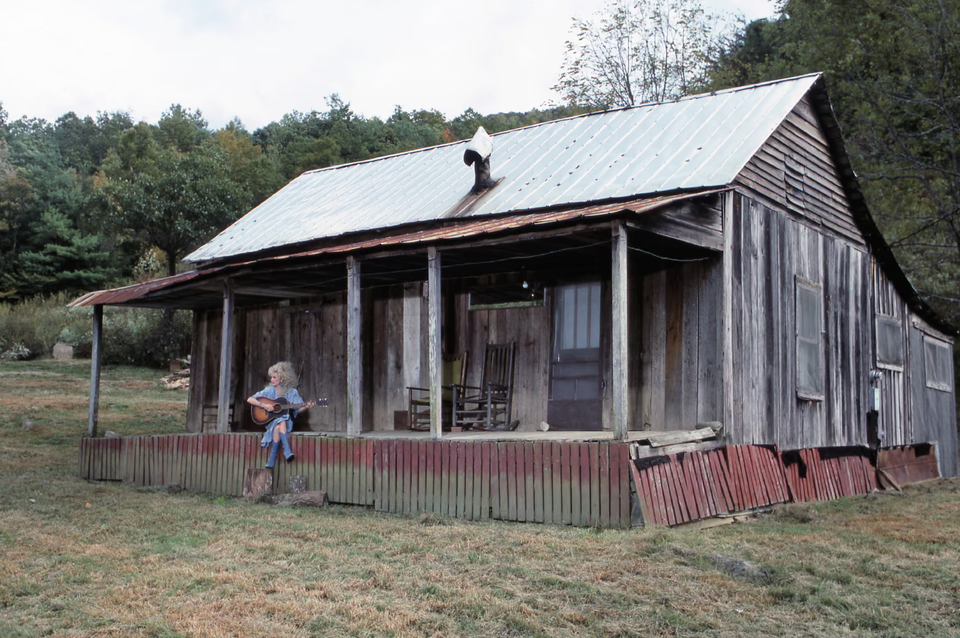
Genius, like lightning, can strike anywhere. In the bitter winter of 1946, it flashed through the gaps in the walls of a log cabin in the Smoky Mountains of Eastern Tennessee where Avie Lee Parton had just given birth to the fourth of 12 children. The doctor was paid in cornmeal – the only currency the family could spare.
That baby would become one of the most successful female musicians of all time. In a career spanning six decades, Dolly Parton won 10 Grammys and wrote 3000 songs, 25 of which were number one hits on the US country charts. Her voice had a tremulous beauty, as if a fragment of the universe had snagged inside her petite plasticky body, with its pneumatic breasts and hair like a peroxide aloe vera plant.
Her interviews were peppered with witticisms repeated so often they became known as Dollyisms, including the one that lent its title to this essay: “I know I’m not dumb. I also know I’m not blonde.”
****
The reason I loved her is that she was someone who penetrated to the heart of what it means to be human, finding a way to package it up into sweet little ditties we could all hum along to.
A natural storyteller, she wove her legend with as much care as the coat her mother once sewed from rags, immortalised in the song Coat of Many Colours. Her lyrics frequently ‘wander the seasons of her youth’, recalling a childhood, like so many in Appalachia, lived with barely a cent – but plenty of love.
The vignettes she sketched are tender and intimate: evenings propped on two-legged stools on humming porches, watching her younger siblings chase fireflies. Despite – or maybe because of their specificity – her stories are something you can hang your heart on. They speak to universal human experiences: love, home, jealousy, nostalgia, ambition, the pain of being misunderstood, loss and the joy of self-expression.
Her art reminds us of our shared humanity. That's the power of stories – they send out invisible mycelial threads from the teller’s inner world to that of the listener. And Dolly’s threads reached into the most unlikely places.
****
Often underestimated because of her artificial appearance, Parton always enjoyed manipulating her image. As a child, she’d stain her lips with pokeberry juice and draw on a beauty mark with a burned matchstick. Her look – which, in Backwoods Barbie, she described as ‘just a country girl’s idea of glam’ – was inspired by a character from her childhood known as the ‘town tramp’. In 2023 she told the Guardian: “She had bright red lipstick, long red fingernails. She had high-heeled shoes, short skirts, low-cut tops, and I just thought she was beautiful.” Given today’s prevalence of tweakments and Instagram filters, there’s something refreshingly real about being so fake.
It also speaks to Parton’s secret weapon: the strange strength of her vulnerability. Arguably it takes a lot of insecurity to go to bed with a full face of make-up lest your husband be confronted with the supposed horror of your natural appearance. But it also takes a hell of a lot of confidence to admit you do so on the world stage.
Throughout her career, she was adamant that her image was both deliberate and shrewd: “Everybody thinks that the joke's on me, but in fact, the joke is on the public. I know very well what I'm doing, and I can change my image any time I want to,” she told a television journalist in 1977.
***
For more evidence of that shrewdness, Parton started her own publishing company at just 20 years of age, at a time when young musicians from poor backgrounds often signed away their rights for a chance at stardom. When Elvis Presley wanted to record I Will Always Love You, his manager demanded half the publishing rights. Parton refused, later comparing her songs to her children. She retained ownership of her publishing catalogue throughout her life which is now estimated by Forbes to be worth around $150 million.
Although writing is a very different business – and I am far from deluded enough to believe I could ever achieve Parton’s level of success – I know how easy it is to sign away your rights as a young creative. You’re so incredibly hungry for opportunity and aware that if you hesitate there are hundreds of thousands waiting in the queue behind you. It’s only now, with 15 years’ experience under my belt and a life-changing illness, that I am finally starting to negotiate my own terms.
***
Parton’s life belonged to a version of the American Dream few of us believe in any longer – a free land where anyone with enough talent and hard work can become a star. Her story feels so old, I can’t believe I was alive at the same time as her. In some ways I can’t believe she was alive at all – she seems more like the Great Gatsby or Paul Bunyan, a folk character from a time when wealth did not conjure up images of corruption, egos distended to the point of lunacy and fortunes used to accelerate climate collapse.
She donated more than 300 million books through her Imagination Library, inspired by her father Robert Lee’s inability to read and write; he told her it was the thing she had done of which he was most proud. Nor did she forget the community she came from. In 1986, she bought an ownership stake in an existing theme park in the mountains where she grew up. It became Dollywood and remains one of the county’s largest employers.
She met her husband, Carl Dean, in 1964 outside Nashville’s Wishy Washy Laundromat. Although she was one of the most famous women in the world, her private life was never for sale. Rather than join his wife in the public eye, Dean ran a small asphalt and driveway paving business. The couple renewed their vows in 2016 after 50 years of marriage.
She literally went from rags to riches, yet from afar she seemed remarkably resistant to the corrosive effects of extreme success. For us watching, there remained a purity about her, like a mountain spring, or a sparrow, or the smell of woodsmoke on a crisp morning.
***
She was artificial and authentic, fragile and formidable, earthy and transcendent; it’s this ability to embody apparent contradictions that I love most about her. Although she performed an exaggerated version of traditional femininity, she was an outspoken supporter of gay and trans rights, as well as the Black Lives Matter movement. She donated $1 million to coronavirus research at Vanderbilt University, which supported work on the Moderna vaccine. She was one of the few things the political left and right, evangelical Christians, drag queens and Donald Trump could all agree was a good thing.
Dolly existed in a camp of one, refusing to flatten herself into any narrative but her own. In our divided times, we need ‘bridge people’: those capable of moving between different outlooks and realities without entirely belonging to any of them. And when those bridge people can also spin stories that whisper to the soul, they become more vital still. Stories become culture. Culture can ultimately change systems.
****
Some people might have considered 80 such full years a decent run, but Dolly was having none of it. When asked what she would want people to say about her in another 100 years, her response was:
‘She looks darn good for her age.’
And although she passed away last week, in our divided and disorientating age, I have to say: she really does.
In loving memory,
Imogen x
P.s. If you're enjoying Hi Horizon, I'd be very grateful if you'd consider sharing it with a friend who also appreciates hand-crafted writing. As ever, thank you so much for being on this journey with me, it means more to me than I can say.

Of course, you can always buy my book
The Ethical Traveller: 100 Ways To Roam The World Without Ruining It
Member discussion